
Your Shopping Cart

OTHER PRODUCTS
-
 My Store
Fish Resin Craft 088
Regular price Rs. 7,200.00Regular priceUnit price perRs. 10,500.00Sale price Rs. 7,200.00 -
 My Store
Sri Swaminathan & Co Premium Gold Finish Resin Seven Carps Archway Statue (33 cm / 13 Inch)
Regular price Rs. 5,500.00Regular priceUnit price perRs. 9,500.00Sale price Rs. 5,500.00 -
 My Store
Sri Swaminathan & Co Royal Gold Dust Resin Nine Carps Wealth Pot Statue (24 cm / 9.5 Inch)
Regular price Rs. 2,850.00Regular priceUnit price perRs. 5,750.00Sale price Rs. 2,850.00


Sri Swaminathan & Co Pvt Ltd
INCLUSIVE OF ALL TAXES
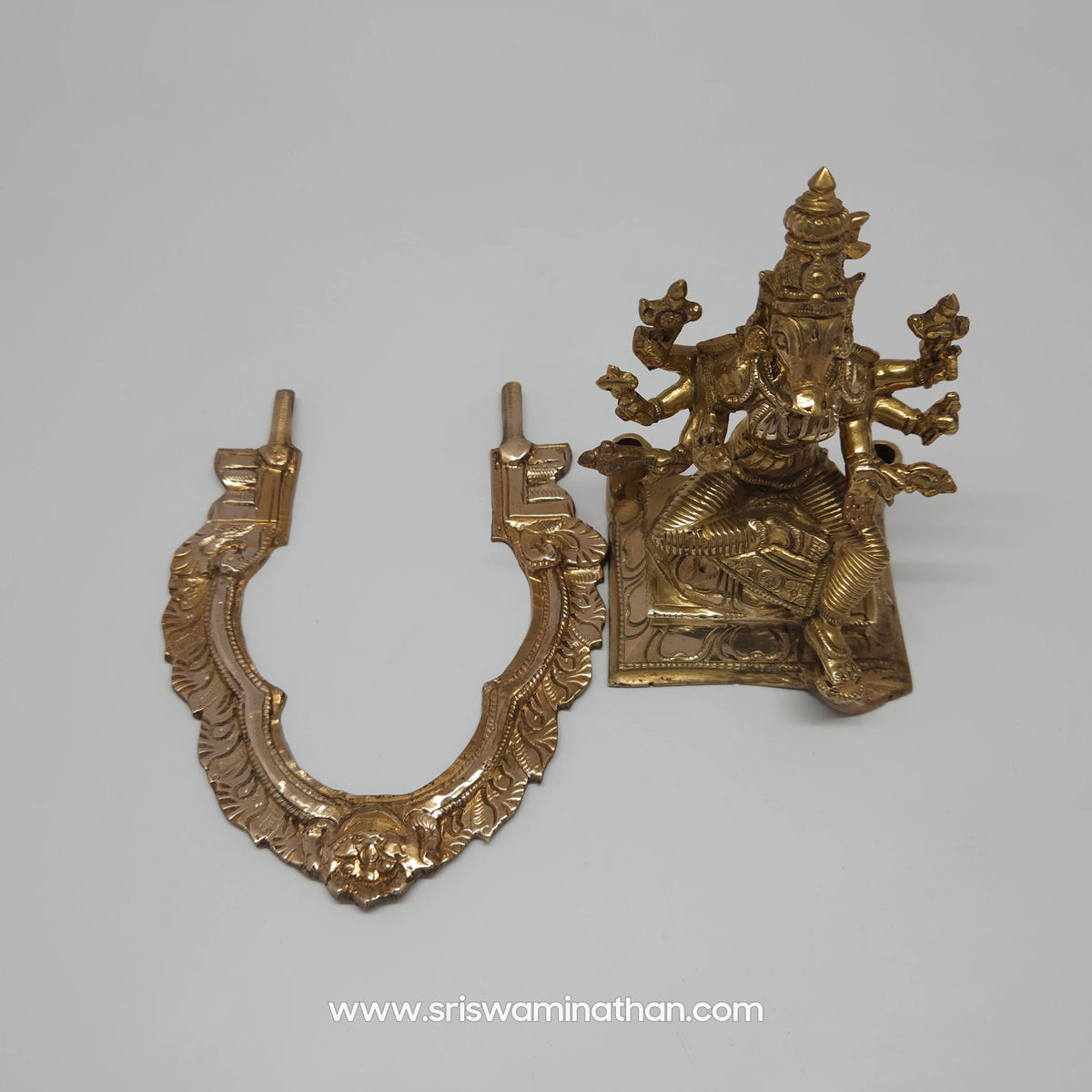
Sri Swaminathan & Co Premium Panchaloha Seated 8 Hand Varahi Amman Statue (6 Inch)
Sri Swaminathan & Co Premium Panchaloha Seated 8 Hand Varahi Amman Statue (6 Inch)
Regular price
Rs. 13,000.00
Regular price
Sale price
Rs. 13,000.00
Unit price
per
Shipping calculated at checkout.
SKU : RJ-14711
Availability : In Stock
🚚 Free Shipping in India
above ₹1,000 | International shipping available
above ₹1,000 | International shipping available
📦 Safe Delivery
Zero Breakage Guarantee
Zero Breakage Guarantee
📹 WhatsApp Video
Before We Dispatch
Before We Dispatch
✅ Real Product Photos
No Filters. No AI.
No Filters. No AI.
🏆 53 Years of Trust
Kumbakonam's Finest
Kumbakonam's Finest
Couldn't load pickup availability
Shipping & Returns
Shipping & Returns
🚚 free shipping on all orders above ₹1,000 for India delivery only.
Tamil Nadu: 1-3 days
South India (outside Tamil Nadu): 2–5 days
Rest of India: 5–10 days
🌍 International shipping - International shipping charges will be added to the product price.
Call or WhatsApp us for shipping cost before ordering


Sri Swaminathan & Co · Since 1973 · Sacred Trust
Varahi Amman — The Boar-Faced Shakti of Protection & Supreme Power
Panchaloha · Seated Form · 8 Arms · 16 cm / 6 Inch · Lost-Wax Cast · Swamimalai Sthapathis
“Of all the Sapta Matrikas, it is Varahi who is most rarely worshipped and most powerfully present. She is the Shakti of Vishnu in his Varaha form — the one who lifted the earth from darkness. Her boar face is not a symbol of the animal. It is the face of the one who descends without hesitation into the deepest disorder and carries the world back to light. She is worshipped after midnight. She responds to the devotion of those who are not afraid to ask.”
Varahi Amman — the boar-faced Shakti, the sixth of the Sapta Matrikas, the commander of Devi’s forces — is among the most powerful and most esoteric of all goddess forms in the South Indian Shakta tradition. She is simultaneously the Shakti of Varaha, the third avatar of Vishnu who restored the earth from the cosmic ocean, and an independent manifestation of the supreme feminine power in her most fierce and protective aspect. In Tamil Nadu’s Shakta temples, Varahi holds a position of extraordinary sanctity — her shrines are typically closed during the day and opened only at night, her worship conducted after the third prahar, her presence considered too powerful for casual approach. To install Varahi in the home altar is an act of deliberate invitation — an acknowledgement that the householder seeks not comfort but protection of the highest and most uncompromising kind. This Seated Varahi Amman, cast in authentic Panchaloha by the master sthapathis of Swamimalai using the ancient lost-wax method, is a consecration-ready sacred murti of the highest traditional standard.
Varahi — The Iconography of the Eight Arms
This murti depicts Varahi Amman in her complete eight-armed form, each hand carrying its prescribed attribute as laid down in the Shakta Agamas:
- Abhaya Mudra — the gesture of fearlessness and supreme protection. The raised open palm that says to the devotee: do not be afraid. I am here. Nothing reaches you without passing through me first.
- Varada Mudra — the gesture of boon-granting. The open downward palm of the goddess who gives freely to those who come before her with sincerity. Together with Abhaya, these two mudras form the complete assurance of Varahi’s care for the devotee.
- Hala (Plough) — the divine plough, weapon of cosmic labour and transformation. In Varahi’s hands, the Hala signifies her power to uproot all that is false, all that is entrenched by darkness, and turn the ground of the devotee’s life toward new growth and rightful order. The Hala also appears in the hands of Balarama — its presence in Varahi’s iconography deepens her connection to the Vaishnava tradition and the full force of divine cosmic will.
- Musala (Wooden Pestle) — the pestle that crushes and refines. Paired with the Hala as Balarama’s twin weapons, the Musala in Varahi’s hand is the force that destroys what is already uprooted — grinding down every obstacle, every enemy force, and every remnant of negativity until nothing harmful remains. Together the Hala and Musala represent Varahi’s complete agricultural and cosmic power — the ability to uproot, process, and transform.
- Shankha (Conch) — the sound of creation and the vibration of Vishnu’s cosmic will that Varahi inherited as his Shakti. Its sound disperses negative energies and announces the presence of the divine. Varahi holding the Shankha signals her Vaishnava lineage and her role as the cosmic protector of righteous creation.
- Chakra (Discus) — the Sudarshana Chakra, the spinning disc of supreme divine will and swift justice. In Varahi’s hands, the Chakra signifies her power to cut through every obstacle and every force that obstructs the devotee’s rightful path — with a precision and speed that leaves no room for delay.
- Ankusha (Goad) — the instrument of direction and sovereign command. The Ankusha guides and controls — it is the authority of Varahi over all forces, seen and unseen, that she directs in service of the devotee’s welfare and protection.
- Pasha (Noose) — the noose that binds all enemies, all negative forces, and all harmful intentions directed toward the devotee. The Pasha in Varahi’s hand means that no enemy of her devotee escapes her reach. She captures, binds, and neutralises all that threatens those under her protection.
Panchaloha — The Sacred Five-Metal Alloy
This murti is cast in Panchaloha — the sacred five-metal alloy of copper, zinc, tin, gold, and silver — as prescribed by the Vishwakarma Agama for all consecrated temple idols. In our ready-made collection, a pinch of gold and silver is added as per the sasthra of Panchaloha at the time of casting. The five metals together create an alloy of exceptional ritual purity — one that the tradition holds as the only appropriate material for a murti that will receive abhishekam, daily worship, and full ritual consecration. The Panchaloha surface carries a warm golden depth that deepens with worship — unlike brass, it does not tarnish to a dull patina but holds and intensifies its sacred lustre over generations of ritual contact.
Sacred Specifications
| Dimension | Indian | Global |
|---|---|---|
| Height | 16 cm | 6.30 in |
| Length | 12 cm | 4.72 in |
| Depth | 7 cm | 2.76 in |
| Weight | ~900 g | ~1.98 lbs |
| Arms | 8 — Abhaya · Varada · Hala · Musala · Shankha · Chakra · Ankusha · Pasha | |
| Material | Panchaloha — five-metal sacred alloy (copper, zinc, tin, gold, silver) | |
| Casting Method | Lost-wax (Madhucchishta Vidhana) — Swamimalai sthapathis | |
| Form | Seated Varahi Amman — Peethasana | |
| Ritual Use | Fully suitable for abhishekam, daily worship, and all ritual practices | |
Weight is approximate and may vary slightly. All dimensions are of the murti including base.
Sacred Blessings — What Varahi Brings to the Home
- Supreme Protection — Varahi is the commander of Devi’s armies. Her presence in the home creates an unbreachable field of protective energy around the household, its members, and its welfare. She is particularly worshipped for protection from enemies, evil eye, and all forms of negative interference.
- Destruction of Obstacles — as the Shakti who descends into chaos without hesitation, Varahi removes the deepest and most persistent obstacles from the devotee’s path — obstacles that other forms of worship may not reach.
- Justice & Rightful Resolution — Varahi’s Chakra and Ankusha are the symbols of rightful authority and swift justice. She is worshipped by those facing legal disputes, institutional injustice, or situations requiring the restoration of what is rightfully theirs.
- Vastu Placement — Varahi is ideally placed in the Southwest corner of the home or pooja room, the direction of protection and stability in Vastu Shastra. She may also be placed facing North to activate her full protective command over the household.
Auspicious Occasions
▶ For the Devotee Who Seeks Her
Varahi is not worshipped casually. She is sought by those who need her — and those who seek her with sincerity receive her protection in full. This murti is appropriate for home altar installation · Navaratri worship · Ashtami and Navami poojas · Varahi Jayanti · temple consecration gifts · those beginning Varahi Moola Mantra sadhana. At ~900 g of Panchaloha, this is a murti of lasting weight and presence — one that will be worshipped for generations.
Varahi is not worshipped casually. She is sought by those who need her — and those who seek her with sincerity receive her protection in full. This murti is appropriate for home altar installation · Navaratri worship · Ashtami and Navami poojas · Varahi Jayanti · temple consecration gifts · those beginning Varahi Moola Mantra sadhana. At ~900 g of Panchaloha, this is a murti of lasting weight and presence — one that will be worshipped for generations.
Care & Ritual Maintenance
- Abhishekam — fully suitable for water, milk, curd, honey, panchamrit, and all ritual substances. Wipe dry after each ritual with a soft cloth.
- Daily Worship — wipe gently with a soft dry cloth. The Panchaloha surface deepens in lustre with regular ritual contact — no polishing required.
- Avoid Harsh Chemicals — no synthetic cleaners or abrasive materials. The Panchaloha alloy is self-sustaining under traditional ritual care.
- Consecration — this murti is ready to receive Prana Pratishtha. We recommend performing consecration with a qualified priest before beginning daily worship.
“She was called when the world needed to be lifted from darkness. She descended without hesitation. She is still descending — for every household that calls her with sincerity, she arrives. Place her in your home. Light the lamp. She will do the rest.”
Sri Swaminathan & Co · Since 1973 · Sacred Trust
Kumbakonam · Tamil Nadu · Trusted by Devotees & Collectors Across India & the World
Care & Maintenance
Made from super fine quality brass with a golden powder coated polish — gives a satin gold glow like a gold statue. Purely for decor and dry display. If used for pooja rituals, the golden polish layer will peel off over time. Keep it dry — and it will look as fresh as the day you bought it. Always.
No restrictions for pooja rituals. Avoid harsh chemicals to preserve its traditional antique look. The dark patina is intentional — it deepens the beauty over time.
Powerful. Preferred for active pooja rituals — no restrictions. Traditional Cleaning Method: Use dara liquid and cashew nut seeds — an ancient method used by temple priests for generations. Gently rub with cashew nut seeds dipped in dara liquid. Rinse clean. Your idol will look brand new. Cleaning once every 30 days is recommended if used regularly for pooja.
Frequently Asked Questions
We understand this completely. You are buying online from a shop you have never visited. Here is the truth: Sri Swaminathan & Co has been standing at 61, Bakthapuri Street, Kumbakonam since 1973 — over 53 years. We are not a warehouse or a reseller. We are a family shop, rooted in Kumbakonam, where priests, temples, and devotees from across Tamil Nadu have been coming for generations. Travellers from Singapore, Malaysia, UK, and USA visit us when they come to Kumbakonam — because they know us. You can walk into our shop any day. We are real.
Because most sites sell products. We sell legacy. Every item in our shop — whether it is a small brass lamp or a 4-foot Panchaloha idol — comes from craftsmen whose families have been doing this since the Chola period. We do not source from factories. We do not compromise on material or finish to reduce price. When you buy from us, you are not just getting a product — you are getting 53 years of trust, traditional craftsmanship, and the assurance that what you receive is exactly what a devotee deserves.
This is a fair concern and we respect it. Here is why we do not offer COD — our products are handcrafted, fragile, and carefully packed for safe delivery. COD returns damage both the product and the trust. Instead, we offer something better: WhatsApp us before you order. We will send you a video of the actual product — the exact piece you will receive. You can ask us anything. Only when you are fully satisfied, you pay. Our 53-year reputation is our guarantee — we cannot afford to let even one customer down.
Not at all — and we are glad you asked this. Our products are made of brass and Panchaloha — metals that naturally catch and reflect light from every angle. What you see as dark shades or bright reflections in photos is simply the metal doing what metal does — glowing, reflecting, and shining. We photograph every product as-is, with no filters, no AI, no editing. That reflection you see in the photo? You will see the same beautiful glow when it sits in your pooja room. It is not a defect — it is the character of real metal.
Yes — and here is why we say this with full confidence. Panchaloha idols require the right alloy, the right casting method, and the right finishing — done by craftsmen who understand the spiritual significance of what they are making. Our Panchaloha idols are hand-cast in Kumbakonam and Swamimalai by hereditary artisans using the traditional lost-wax method — the same method used to make idols for consecrated temples across South India. Priests trust our idols for temple installation. Families trust us for home pooja rooms. In 53 years, that trust has never been broken.